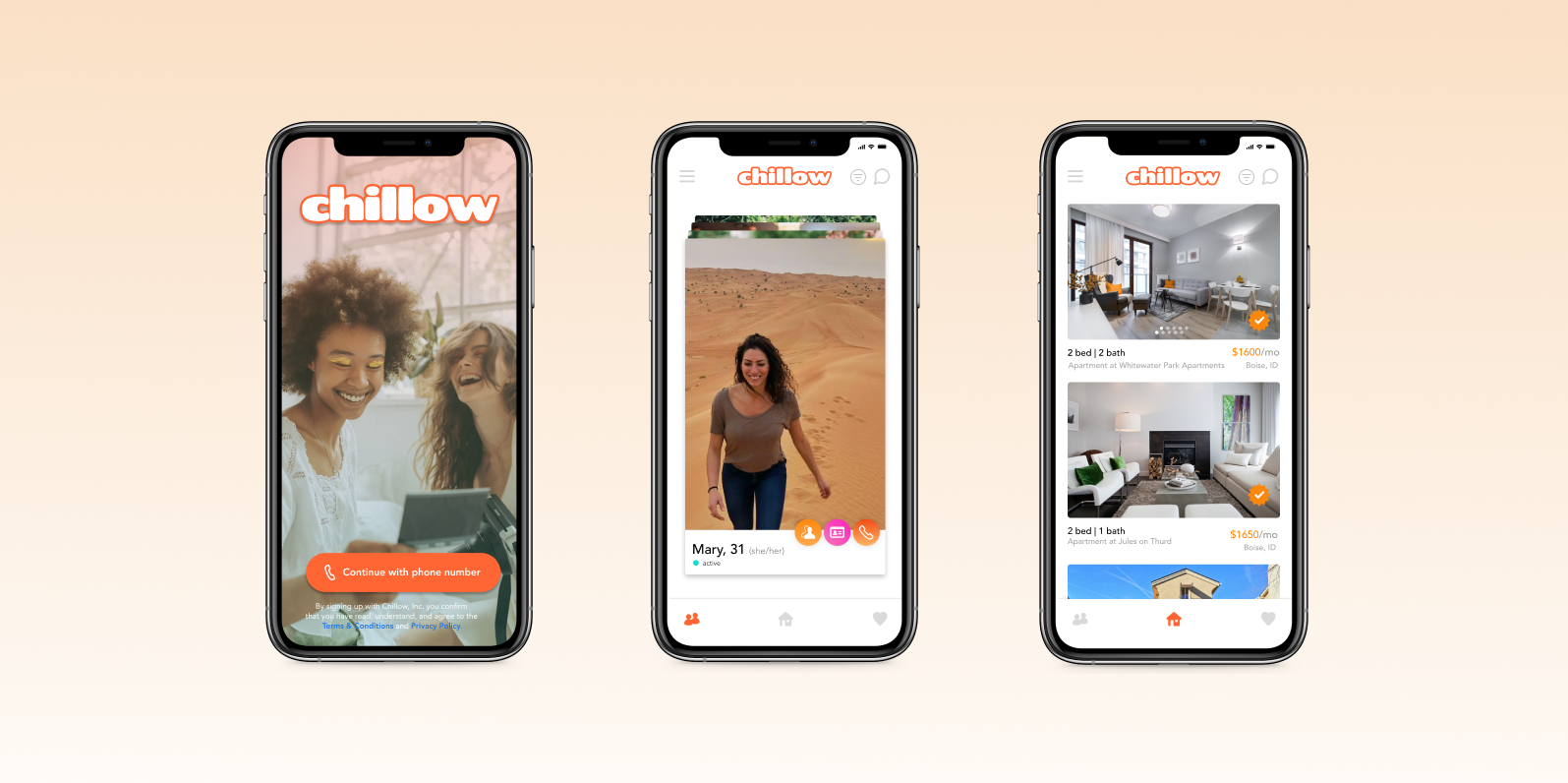
Chillow App
We updated Chillow's sign up and navigation, improving accessibility, usability, and user retention.
Duration
Oct 2022 - Mar 2023
Role
UX/UI Designer
Tools Used
Figma, Jira
Project Context
About Chillow
Chillow is a mobile app that allows users to match with potential roommates and housing through a B2B2C model.
About My Role
In addition to overseeing the design and research process, I also collaborated with marketing, sales, and engineering teams to develop product strategies.
Who Are The Users?
Chillow's user base is mostly comprised college students and young professionals. Within this group, there are 4 unique types of user experiences:
- Users looking to rent out a place
- Users looking for a place, and roommates to share that place
- Users looking for a place only
- Users looking for roommates to share their current place with
Sign Up Flow
Key Improvements
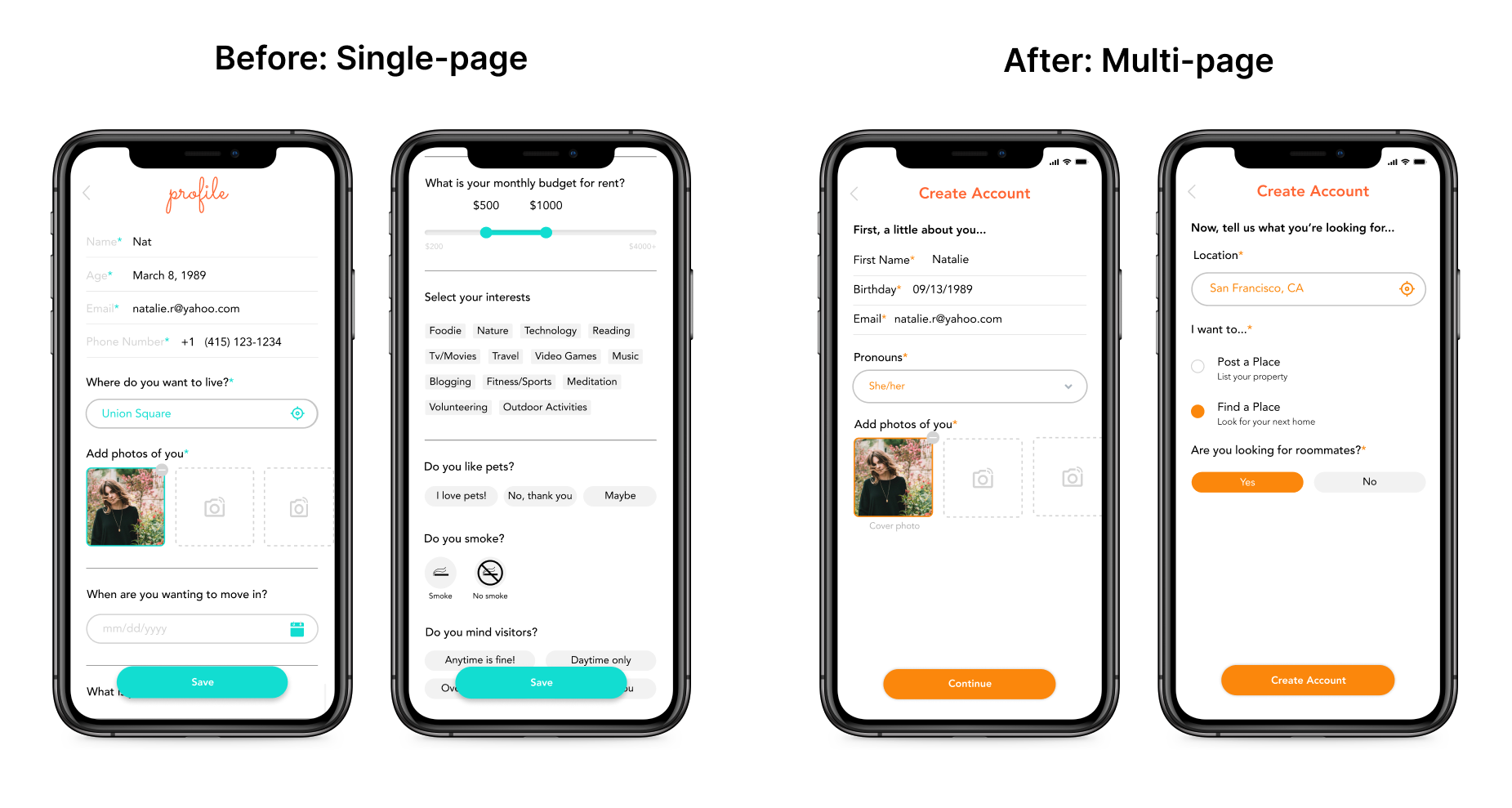
We revamped Chillow's sign up flow to make it a frictionless process. With an understanding that there are 4 very different user goals, we incorporated branching logic and significantly reduced scroll fatigue.
The colors and heading fonts were also updated for readability. Button text was updated to give users a better idea of their progress. Overall, the changes not only gave the app a more cohesive look, it also allowed users to quickly access Chillow's core features.
Usability Testing
With buy-in from my team, I led the entire usability testing process, which included creating a user research plan, definining success metrics, gathering participants, and testing.
I conducted 15 user testing sessions with participants using Zoom and Figma prototypes. KPIs that were tracked during the process include time on task, user satisfaction rate, and task success rate. I compiled notes from each session to find patterns, which were synthesized into recommended improvements that I presented to my team.
What I Learned...
Create clarity when data doesn’t exist
When I joined the Chillow team, there was little user feedback to guide product decisions, so I took initiative to create clarity. I proposed two lightweight, scalable research approaches: a focus-group style study and remote moderated usability testing. After getting buy-in, we recruited university students from our target audience to study usage patterns. The research showed meaningful gaps between how people truly choose roommates vs. how the app framed that process. This reinforced a lesson I carry with me: meaningful data isn’t usually available, but you can always go find it :)
Good design is sustained through stewardship
The existing design system for Chillow had its flaws. Components were used inconsistently and documentation was lacking. As I built on top of the system in Figma, I took ownership of improving its clarity by documenting decisions and maintaining change logs. I also collaborated closely with new designers when they joined, guiding them at first and then supporting them as they learned to maintain the system independently. We’re taught to think beyond the idea of a “final handoff” for devs, but this experience showed me how critical that mindset is to sustaining a system over time.